Damp Patches After New Double Glazing Wall Scan Uk
If damp patches appeared after new double glazing, do not jump straight to "the installer caused a leak". New airtight windows can change where moisture shows up. First separate sealed-unit misting, room-side condensation, cold reveals, poor ventilation and genuine water ingress.
The Gowercroft retrofit condensation guide explains the core building-physics problem: older homes leaked air naturally, while modern efficient glazing can make moisture control depend more heavily on planned ventilation, insulation and heating balance.
Step 1: identify the mist
Mist between the panes points towards a sealed-unit issue and a wall meter will not diagnose that. Moisture on the room side of the glass points towards indoor humidity. Clear glass with mould on the reveal or nearby external wall often means the wall or reveal has become the coldest surface.
Step 2: scan the wall comparatively
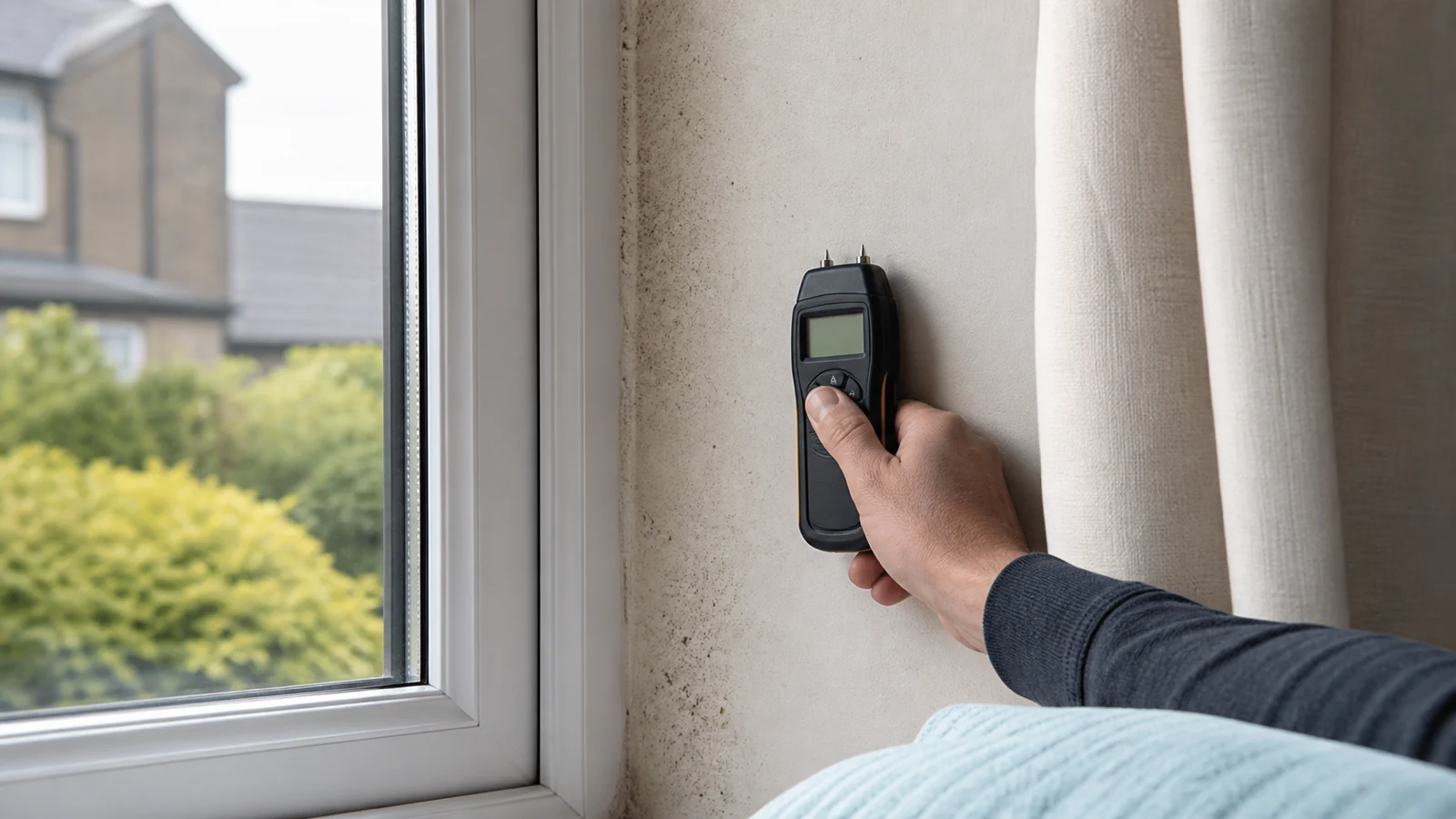
Use pinless mode on the reveal, the wall below the sill, the adjacent external wall and an internal wall in the same room. You are looking for a pattern, not a magic pass or fail number. If the highest readings sit below the frame and worsen after rain, installation detailing or external water paths need attention. If the highest readings sit in cold corners during winter, condensation and thermal bridging become more likely.
Step 3: check the everyday moisture load
- Are trickle vents open where fitted?
- Do bathroom and kitchen extractors run long enough?
- Is laundry drying indoors without extra ventilation?
- Is furniture tight against an external wall?
- Does the room drop cold overnight and warm quickly in the morning?
These details matter because condensation is a behaviour problem plus a building-temperature problem. A wall scan helps you see where it lands, but it will not fix the moisture source.
Decision table
| Finding | Likely route | Next action |
|---|---|---|
| Mist between panes | Sealed unit fault | Use the glazing warranty route |
| Wet room-side glass each morning | Indoor humidity | Improve ventilation and heating routine |
| Mould on reveal, clear glass | Cold bridge or poor reveal insulation | Map the reveal and discuss detailing |
| Wet below frame after rain | Possible ingress | Document and ask installer or surveyor to inspect |
When a meter is relevant
If you need to compare the reveal, sill, external wall and a dry control wall over a few weeks, a dual-mode meter is relevant. The same-site dual-mode moisture meter detail page is the next step for that wall-mapping job. If the problem is between the glass panes, use the window warranty route instead.