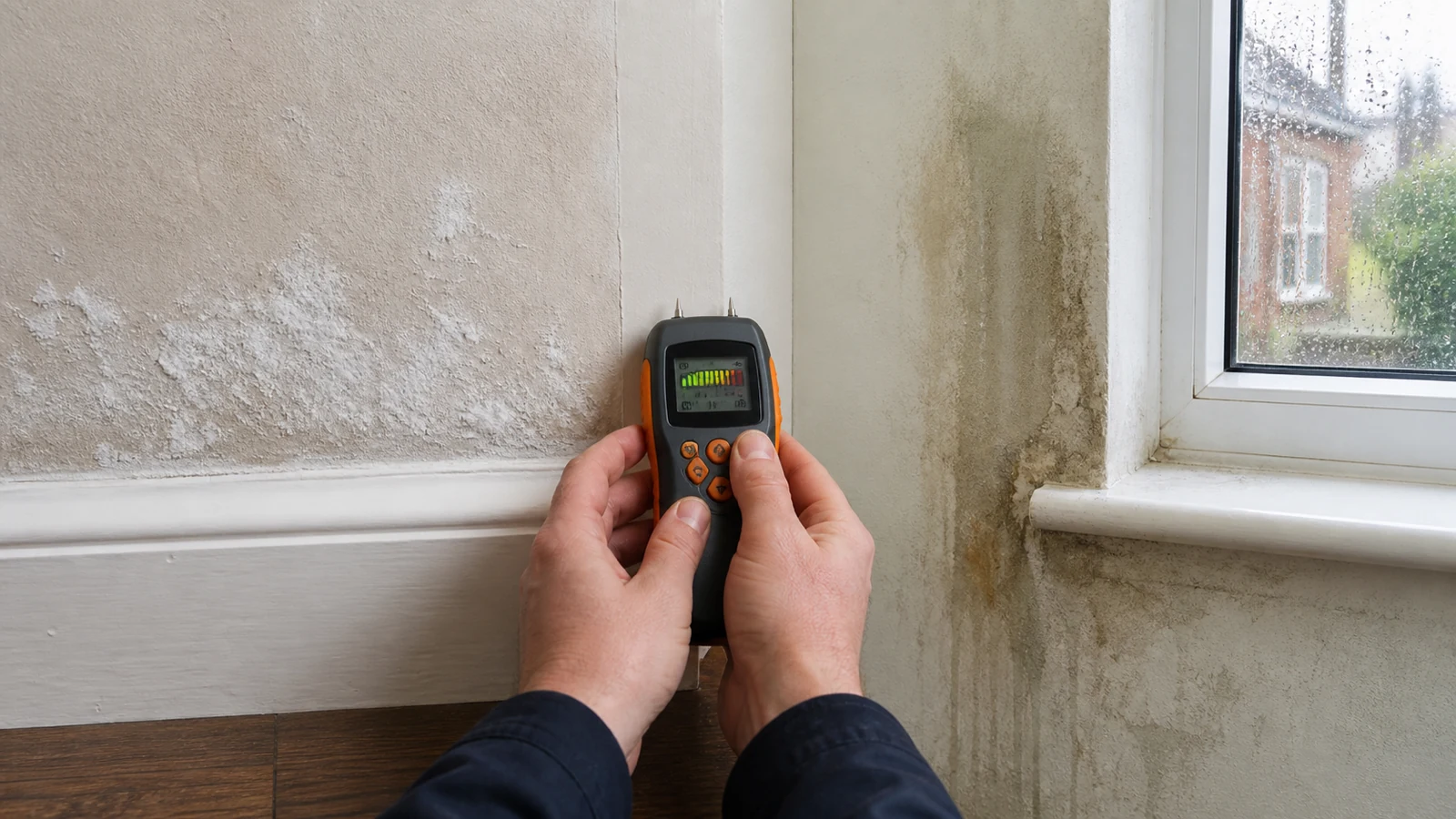
Hygroscopic Salts Vs Active Damp Meter Readings Uk
A high damp meter reading on old plaster can mean active moisture, but it can also be amplified by hygroscopic salts or conductive materials. The practical answer is to read the pattern: height, weather link, wall history, surface salts, adjacent dry controls and repeat readings over time.
PCA guidance on moisture meters discusses how meter readings should be interpreted with care, including the effect of salts. A Sussex Damp Experts explainer on salt-loaded plaster describes why old plasters can give very high readings because salts attract moisture from humid air and conduct electricity.
The pattern matters more than the peak
A single peak reading is weak evidence. A band of high readings on a chimney breast with white crystals is a different story from a rain-linked patch below a cracked render line. Active damp usually has a current source: rain, plumbing, bridging, condensation, ground level or a trapped-wall build-up. Salt contamination may be a historic memory of old wetting that still fools electrical readings.
Comparison table
| Clue | Salt-loaded plaster | Active damp |
|---|---|---|
| Weather link | May rise with humidity, not only rain | Often worsens after rain, leaks or use of plumbing |
| Surface | White bloom, dusty plaster, old chimney or skirting band | Darkening, staining, peeling, tide marks or wet edges |
| Meter pattern | High on old contaminated bands, sometimes without visible wetness | Tracks a route from the source or coldest surface |
| Best next check | Specialist salt-aware assessment if money is at stake | Find and fix the moisture source before finishes |
Use pin and pinless as cross-checks
Pinless scanning is good for quickly seeing where the suspicious zone begins and ends. Pin readings may help on timber or acceptable test spots, but on old masonry they still need interpretation. If both modes point to the same changing pattern after rain, active moisture climbs the list. If the wall looks dry but the same salt-marked strip stays high, treat the reading cautiously.
RICS damp and mould guidance makes the same broad point for consumers: do not let a meter-only diagnosis drive expensive work before the source has been understood.
Who should not rely on a budget meter alone
Do not use a DIY meter alone to prove rising damp, identify chlorides or nitrates, settle a legal dispute, or approve thousands of pounds of remedial treatment. If the result changes a purchase, sale, insurance decision or tenancy dispute, get an independent specialist opinion.
When a meter is relevant
If your aim is to build a relative map before deciding whether to call a specialist, a dual-mode meter is relevant. The same-site dual-mode moisture meter detail page fits that screening job. It should be used as a decision aid, not as a chemical salt test.